

SPG Dry Cooling has been recognized as one of the 30 Changemakers for 2030, highlighting 30 Belgian companies shaping the future through sustainable and innovative solutions.
Changemakers is an annual initiative by De Tijd , L’Echo , and BNP Paribas , acknowledging SPG Dry Cooling’s contribution to reducing water consumption in critical infrastructure through advanced dry cooling technologies.
As industries face increasing pressure to reduce environmental impact while maintaining performance, cooling systems are becoming a key focus area. SPG Dry Cooling addresses this challenge by enabling large-scale heat rejection without using water.
Why cooling is critical to sustainable infrastructure
Cooling is often seen as a supporting function, yet it is essential to the operation of power generation, industrial production, and hyperscale data centers. These systems generate enormous amounts of heat, and without reliable cooling, they cannot operate safely, efficiently, or continuously.
At the same time, conventional cooling methods rely heavily on water. This creates a growing challenge as water scarcity, environmental regulations, and sustainability targets reshape how infrastructure is designed and operated.
As a result, the demand for water-efficient cooling systems and sustainable thermal management solutions is rapidly increasing across industries.
What SPG dry Cooling does
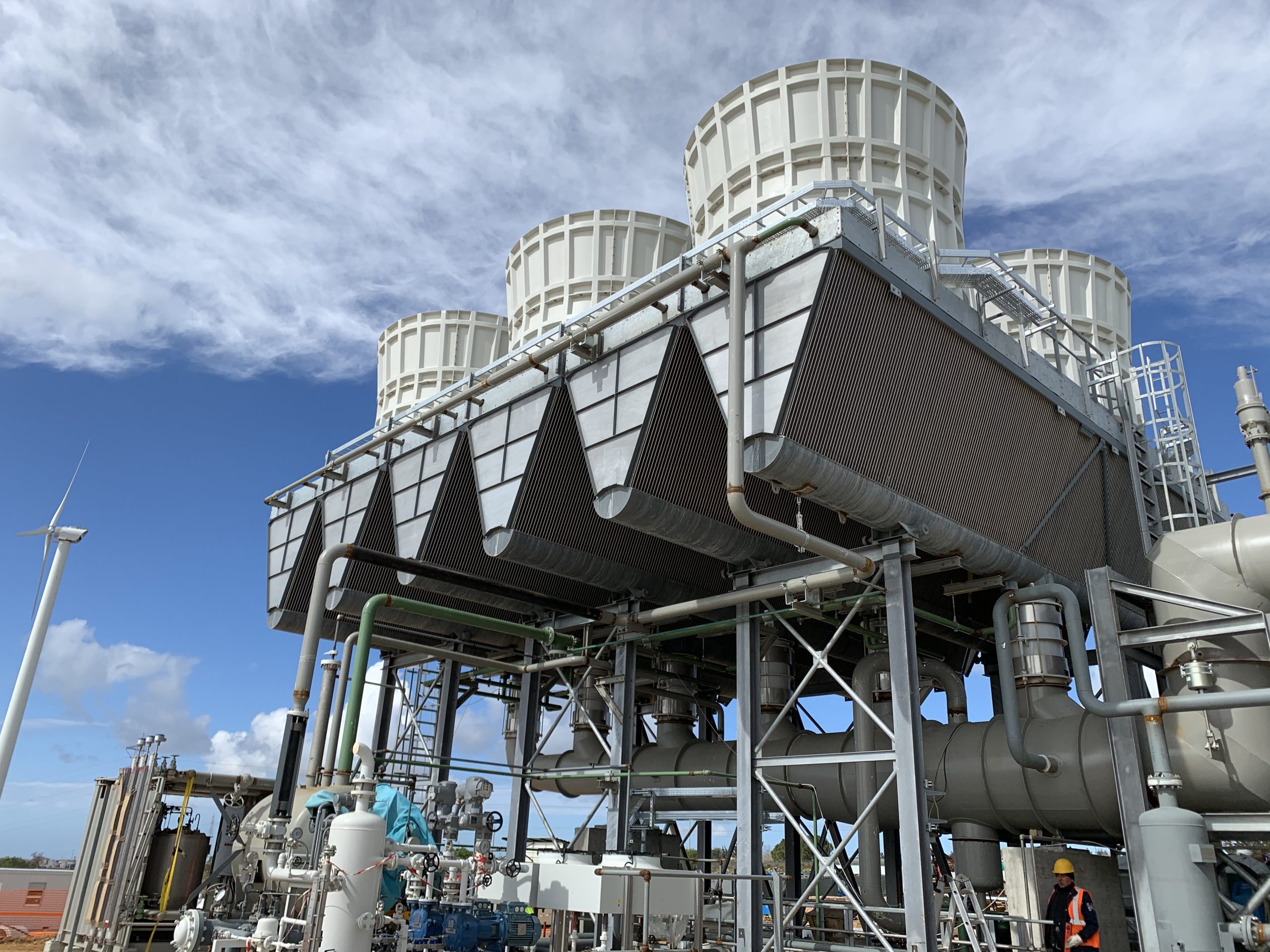
Headquartered in Brussels with a global presence, SPG Dry Cooling designs, manufactures, and integrates large-scale dry cooling systems that use air instead of water to remove heat.
Our portfolio includes:
- Air-cooled condensers for power plants
- Advanced heat exchangers for industrial applications
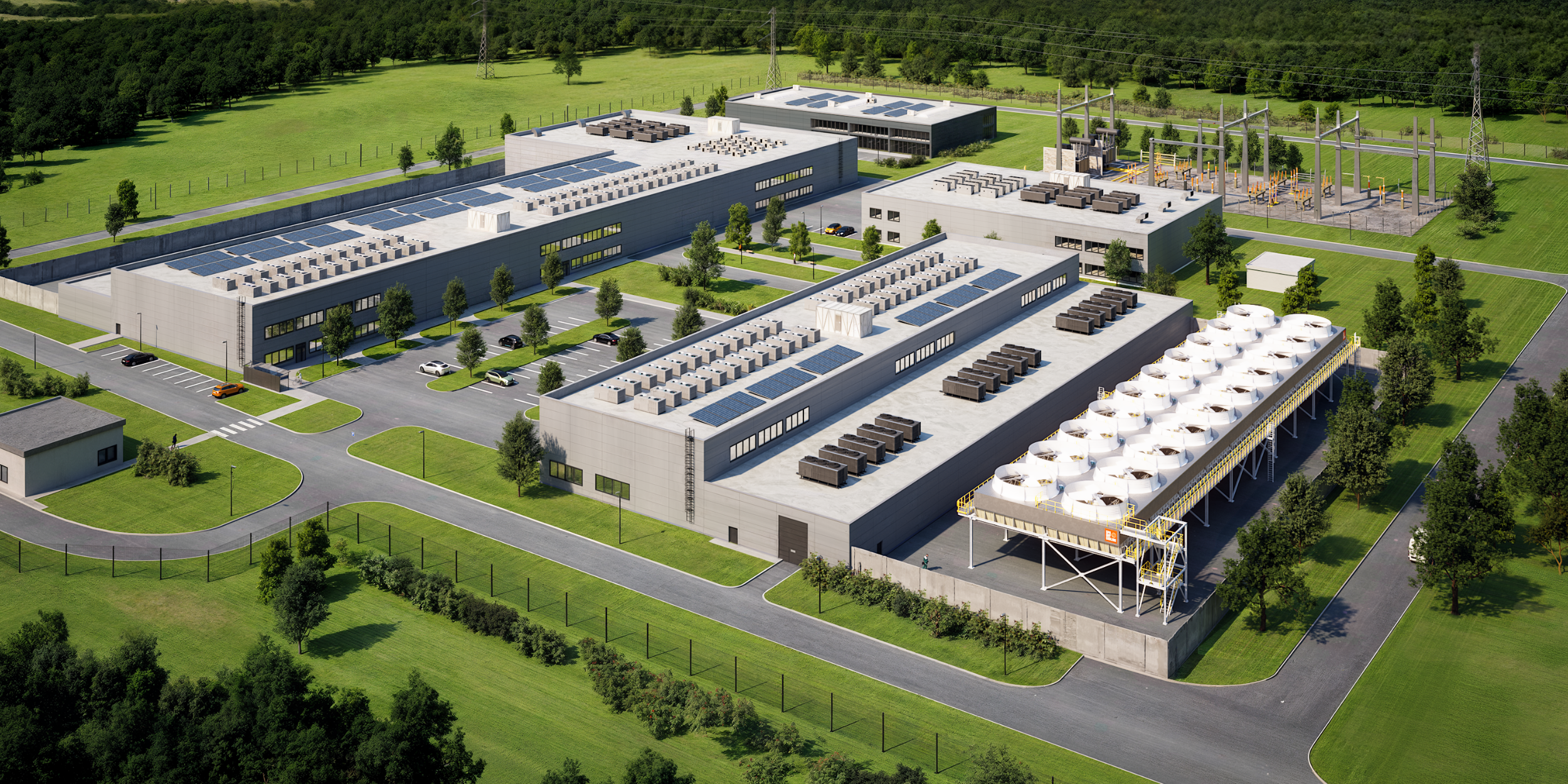
- Cooling solutions for hyperscale data centers
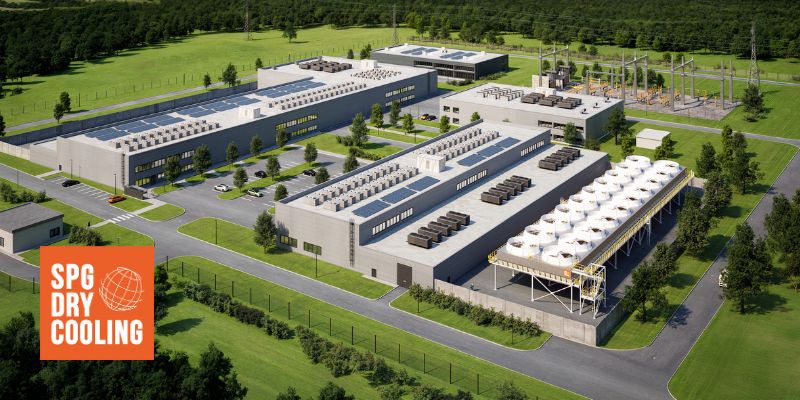
By eliminating the need for water-based cooling, SPG significantly reduces operational water consumption while maintaining high thermal performance in mission-critical environments.
Global Leadership in Dry Cooling Technology
With more than 200,000 MW of installed capacity worldwide, SPG Dry Cooling is the global leader in dry cooling technology, with the largest installed base in the industry.
As a fully integrated manufacturer, SPG delivers:
- Engineering and design
- Manufacturing and testing
- Installation and commissioning
- Long-term performance optimization
This end-to-end capability ensures consistent performance across the full lifecycle of each installation. Over decades, SPG has helped position dry cooling as a proven and creditable solution for critical infrastructure.
Built for the Energy Transition
SPG understands a key reality: even as we decarbonize, existing infrastructure will remain essential for decades. Extending plant life while reducing environmental impact is one of the fastest ways to accelerate progress.
SPG supports this through upgrades, retrofits, and AI-driven performance analytics with ACC360® that improve efficiency and reliability. At the same time, the company is advancing solutions for emerging applications such as carbon capture and sustainable industrial processes.
Engineering Performance that lasts
SPG Dry Cooling applies a lifecycle engineering approach focused on durability, thermal efficiency, operational reliability, and modular design. Each system is optimized to reduce auxiliary power consumption while maintaining consistent performance under varying conditions.
Performance is validated through dedicated testing facilities, supplier collaboration, and commissioning support. This ensures that air-cooled condenser systems deliver measurable, real-world results over decades of operation.
As a Belgian industrial leader with global impact, SPG enables sustainable cooling for power plants, industrial facilities, and data centers—without consuming water.
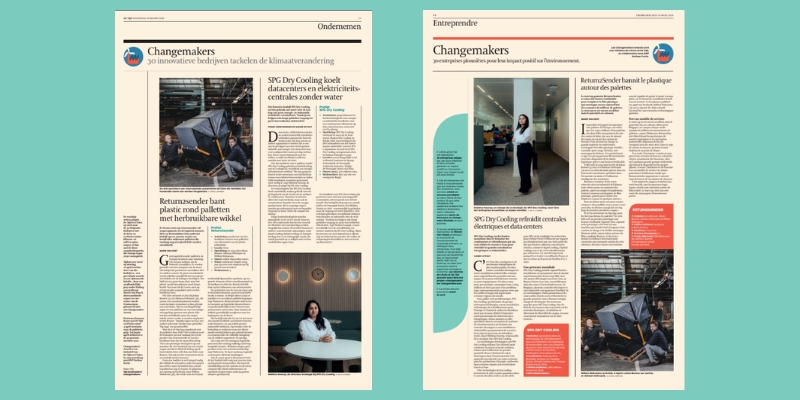
Article De Tijd and L’Echo by Xavier Attout, Frank Dereymaeker
Read More About the Changemakers Recognition
What is Dry Cooling and where is it used?
Dry cooling is a technology that uses air instead of water to remove heat from power generation and industrial processes. By eliminating the need for water in the cooling cycle, it significantly reduces operational water consumption.
Dry cooling is specifically applied in mission-critical environments such as power plants, industrial facilities, and hyperscale data centers where reliability and sustainability are essential.
Why is dry cooling important for sustainability?
Dry cooling plays a key role in reducing the environmental impact of cooling systems. It minimizes water usage, avoids thermal discharge into natural water sources, and enables operation in regions where water availability is limited.
As a pioneer in dry cooling technology, SPG Dry Cooling combines proprietary manufacturing capabilities, including in-house production of Heat Exchanger Bundles, with a broad portfolio of solutions tailored to different applications. Each system is engineered to meet project-specific requirements, ensuring optimal performance while supporting long-term sustainability goals.
Where is dry cooling typically applied?
Dry cooling is primarily used in large-scale applications where heat rejection is critical to operations. These include thermal power plants, industrial processes, and increasingly data centers, where energy efficiency and environmental performance are becoming key design drivers.
As industries evolve and sustainability requirements become more stringent, dry cooling is expanding into new applications that require reliable, water-free thermal management solutions.
In the datacenter sector, dry cooling enables operators to reduce or eliminate water usage while maintaining reliable thermal management for both IT infrastructure and supporting systems such as captive power generation. As hyperscale facilities grow in size and energy demand, dry cooling supports scalable, sustainable designs aligned with stricter environmental requirements.